What Are Anticancer Medicines?
Anticancer medicines are pharmaceuticals which aim to prevent, inhibit, or destroy cancer cells within the body. Some of these medications work by targeting fast growing cancer cells, while others inhibit particular proteins, hormones, or genes that promote tumor and cancer cells growth.
Because doctors now use a combination of medicines based on tumor form, stage, and genetic profile, cancer treatment has become more complex. Patients receive medications that offer higher survival rates and fewer side effects with more accuracy and better options. Let’s understand cancer treatment options in details.
Understanding Cancer Treatment Approaches
Over time, cancer treatment has gone through major shifts. Chemotherapy was the primary treatment choice in the past. Doctors now use targeted therapy, immunotherapy, hormone therapy, and current chemotherapy treatments to improve the outcomes. The biology of cancer determines which approach is best, as each works differently. As a result, patients get more individualized, effective, as well as secure treatment.
Top Anticancer Medicines Overview
Below is a simple breakdown of the most widely used anticancer medicines, grouped by treatment type.
Top Chemotherapy Medicines
Chemotherapy is the most common and traditional treatment option widely used to treat multiple types of cancer. Chemotherapy targets as well as destroys fast growing cancer cells throughout the body. It is commonly used for brain tumors, blood cancers, and solid tumors.
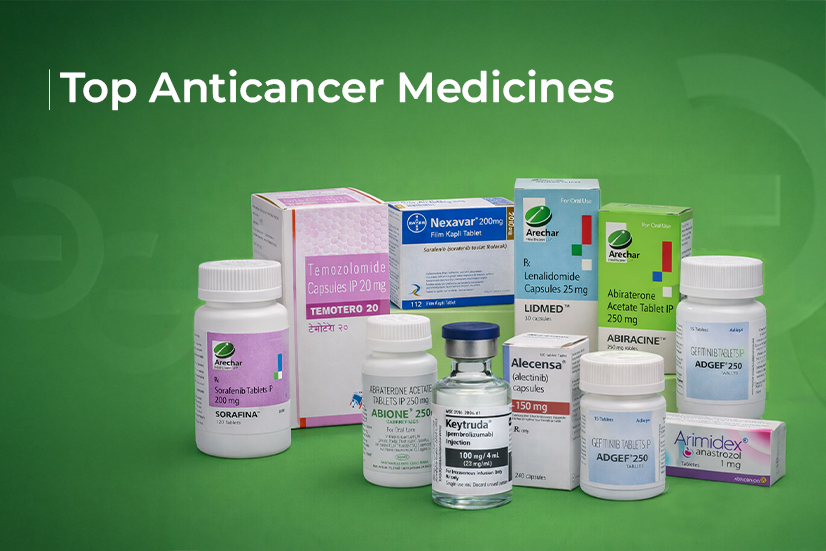
Powerful medicines like Temocine 100mg Capsule, Temotero 20mg Capsule, and Gliogrey 100mg Capsule help to shrink tumors and slow down cancer progression. Also, improve patient outcomes when used under medical supervision.
Top Immunotherapy Medicines
Immunotherapy is one of the most effective cancer treatment options. Immunotherapy strengthens the body’s natural defense system to identify and attack cancer cells more effectively as compared to the other methods. It is especially useful in lung, kidney, skin, and bladder cancers.
Advanced immunotherapy medicines such as Keytruda 100mg Injection, Avastin 400mg Injection, and Imfinzi 500mg Injection enhance immune response to control tumor growth and rapid multiplication of cancer cells. It offers long-term survival benefits for many patients.
Top Hormone Therapy Medicines
Hormone therapy works by blocking or reducing the production of hormone responsible for the growth and multiplication of cancer cells. It is mostly used in breast cancer and prostate cancer. Most trusted and advanced options like Prostaxen 60mg Tablet, Abirapro 250mg Tablet, and Abiracine 250mg Tablet help to slow down disease progression, manage symptoms, and improve survival in hormone-dependent cancers. It also offers fewer side effects as compared to the traditional treatment options.
Top Targeted Therapy Medicines
Targeted therapy focuses on particular gene mutations or proteins that promote cancer cells growth and spread. It is a highly precise treatment option. Medicines like Tucaxen 150mg Tablet, Acaluxen 100mg Capsule, and Alecensa 150mg Capsule effectively block cancer-driving pathways, reduce tumor burden, and provide better results with fewer side effects compared to traditional chemotherapy in mutation-positive patients.
Counter Medicine for Cancer
Breast Cancer
Breast cancer is one of the most common cancers among women at a global level. It originates when abnormal cells of breast start growing in an uncontrolled manner. Breast cancer treatment usually includes hormone blockers and chemotherapy to slow or stop tumor growth.
Medicines like Arimidex 1mg Tablet, Abra Bound 100mg Injection, and Aromasin 25mg Tablet help reduce estrogen production to shrink tumors size, inhibit cancer cell multiplication as well as prevent recurrence. These therapies are commonly used for hormone-receptor–positive breast cancer under strict medical supervision.
Lung Cancer
Lung cancer has become the most common cancer due to rapid changes in lifestyle. It has two most common types: small cell lung cancer and non small cell lung cancer. Lung cancer treatment usually targets genetic mutations and inhibits cancer growth.
Effective medicine options such as Adgef 250mg Tablet, Alecensa 150mg Capsule, and Bdpoma 4mg Capsule work by blocking abnormal pathways that responsible for tumor development. These treatments help to control advanced non-small cell lung cancer. Also improve survival and minimize disease progression in mutation-positive patients.
Prostate Cancer
Prostate cancer develops in the prostate gland, it is the most common cancer among men worldwide. Because prostate cancer can rely on hormone-dependent growth, the goal of treatment is to lower androgen level (male hormones) to control cancer spread.
Some potent drugs like Abirakast 250mg Tablet, Abione 250mg Tablet, and Abiraterone Acetate 250mg Tablet help to prevent the production of testosterone and minimize the spread of cancer, and increase survival. Effective management of advanced or metastatic prostate cancer requires these treatments.
Blood Cancers
Blood cancer commonly originates in the bone marrow and comprises multiple types. Treatments for blood cancers like leukemia must focus on abnormal blood cell growth. Potent anticancer medications like L-Aspara 10000 IU Injection, Imarech 400mg Tablet, and Lidmed 25mg Capsule help to prevent the growth of cancer cells and promote remission, and improve survival rates. These treatments are commonly employed to treat blood cancer in both adults and children.
Liver Cancer
Liver cancer is known as the uncontrolled growth of abnormal cells in the liver, which is a serious yet fatal health condition. In advanced stages the primary goal of liver cancer treatment is to inhibit the flow of blood to the tumor and stop the growth of cancer cells.
Some potent drugs like Nexavar 200mg Tablet, Veenat 100mg Capsule, and Opdivo 100mg Injection are effective choices that stop the spread of cancer by focusing on particular routes. These medications increase survival, particularly for individuals with advanced hepatocellular carcinoma under medical supervision.
Kidney Cancer
Kidney cancer is also known as renal cancer that originates from the kidney. It is a life threatening condition. The aim of kidney cancer treatment, generally in advanced stages, is to reduce tumor growth by focusing on the pathways that cause cancer.
Some most potent drugs like Sunicine 50 mg Capsule, Sorafina 200 mg Tablet, and Vercine 0.5 mg Tablet are the examples of medications that block signals that promote blood vessel development and cancer cell growth. These targeted treatments effectively prevent the growth of the cancer as well as improve outcomes for patients with advanced kidney cancer.
Colorectal Cancer
Colorectal cancer develops in the colon or rectum and usually begins as a polyps. Chemotherapy along with a combination of personalized medications are used in colorectal cancer treatment to prevent and tumor growth.
Drugs like Avastin 100mg Injection, Ts-One 20mg Capsule, and Oxalirech 100mg Injection work by destroying cancer cells, improving therapy response, and inhibiting the blood flow to tumors. These treatment strategies promote better control of illnesses as well as increase survival.
Benefits of Modern Anticancer Drugs
These are the following benefits of modern anticancer drugs:
- Better survival rates
- More targeted and personalized
- Fewer side effects than older treatments
- Works well even in advanced cancers
- Improves quality of life
- Supports combination therapy for stronger results
Common Side Effects & Management Tips
These are the following common side effects of anticancer medicines:
- Fatigue
- Nausea & Vomiting
- Hair Loss (Alopecia)
- Low Blood Counts
- Loss of Appetite & Weight Changes
- Diarrhea or Constipation
- Skin & Nail Changes
- Mouth Sores (Mucositis)
- Neuropathy
- Immune-related Effects
Here’s the following management tips:
- Take short naps and proper rest
- Stay hydrated and take good nutrition
- Do light walking daily and mild exercise.
- Timely reporting of symptoms
- Take anti-nausea medicines on time
- Eat small meals and eat iron-rich food
- Use gentle shampoos
- Maintain hygiene, avoid crowds
- Choose high-calorie small meals and also include smoothies or soups.
- Increase fiber and drink warm water
- Keep hands/feet warm and avoid tight shoes.
- Use fragrance-free moisturizers and avoid sun exposure.
Safety Precautions During Treatment
Must follow the below safety precautions during the treatment:
- Avoid infections by practicing good hygiene
- Do not skip doses
- Follow prescribed diet and hydration guidelines
- Keep track of side effects
- Inform your doctor about all the medicines you take
- Go for regular check-ups and blood tests
Cost of Anticancer Medicines in India
The cost varies widely depending on drug type, brand, strength, and duration. Chemotherapy medicines are more affordable, while targeted therapy and immunotherapy can be expensive. Many brands and generic options help reduce the price for patients.
Future of Cancer Treatment
Here are the following key benefits of modern cancer treatment in future:
- Immunotherapy advancements like CAR-T and vaccines will deliver stronger, long-lasting responses.
- Targeted therapies will expand, offering higher precision with fewer side effects.
- Personalized medicine will become standard by matching treatments to each tumor’s genetic profile.
- Liquid biopsies will enable early detection and real-time treatment monitoring.
- Next-gen combination therapies will boost survival in advanced cancers.
- AI-driven diagnostics will improve accuracy and speed of cancer evaluation.
Conclusion
In conclusion, among many anticancer medications few such as targeted therapy, immunotherapy, and hormone therapy have transformed cancer treatment. With the help of recent developments patients now get treatments that are align to the biology of their tumor/cancer.
Also, it increases the chances of survival as well as improve their quality of life. Globans Pharma a fast growing online pharmacy continues to contribute to this advancement by offering reliable, cutting-edge, and patient-focused cancer medications. Personalized medicine is currently setting the path for an improved future in cancer treatment.
FAQs
Q – How long does cancer treatment usually last?
Treatment duration varies by cancer type and medicine. It may range from a few months to several cycles spread over a year, depending on response.
Q – What are anticancer medicines?
Anticancer medicines are drugs that help stop, slow, or kill cancer cells. They include chemotherapy, targeted therapy, immunotherapy, and hormone therapy.
Q – Do targeted therapies have fewer side effects?
Yes. Targeted therapies act only on cancer-specific genes or proteins, so they usually cause fewer side effects than traditional chemotherapy.
Q – Which treatment is the most effective for cancer?
There is no single “best” treatment. Doctors choose therapy based on cancer type, stage, and genetic reports. Many patients benefit from a combination of modern treatments.
References
- National Cancer Institute (NCI) – Cancer Treatment Overview
- American Cancer Society – Types of Cancer Treatments
- World Health Organization (WHO) – Cancer Fact Sheet
- NCCN Guidelines – Systemic Therapy for Cancer
- PubMed – Research Articles on Chemotherapy, Immunotherapy & Targeted Therapy