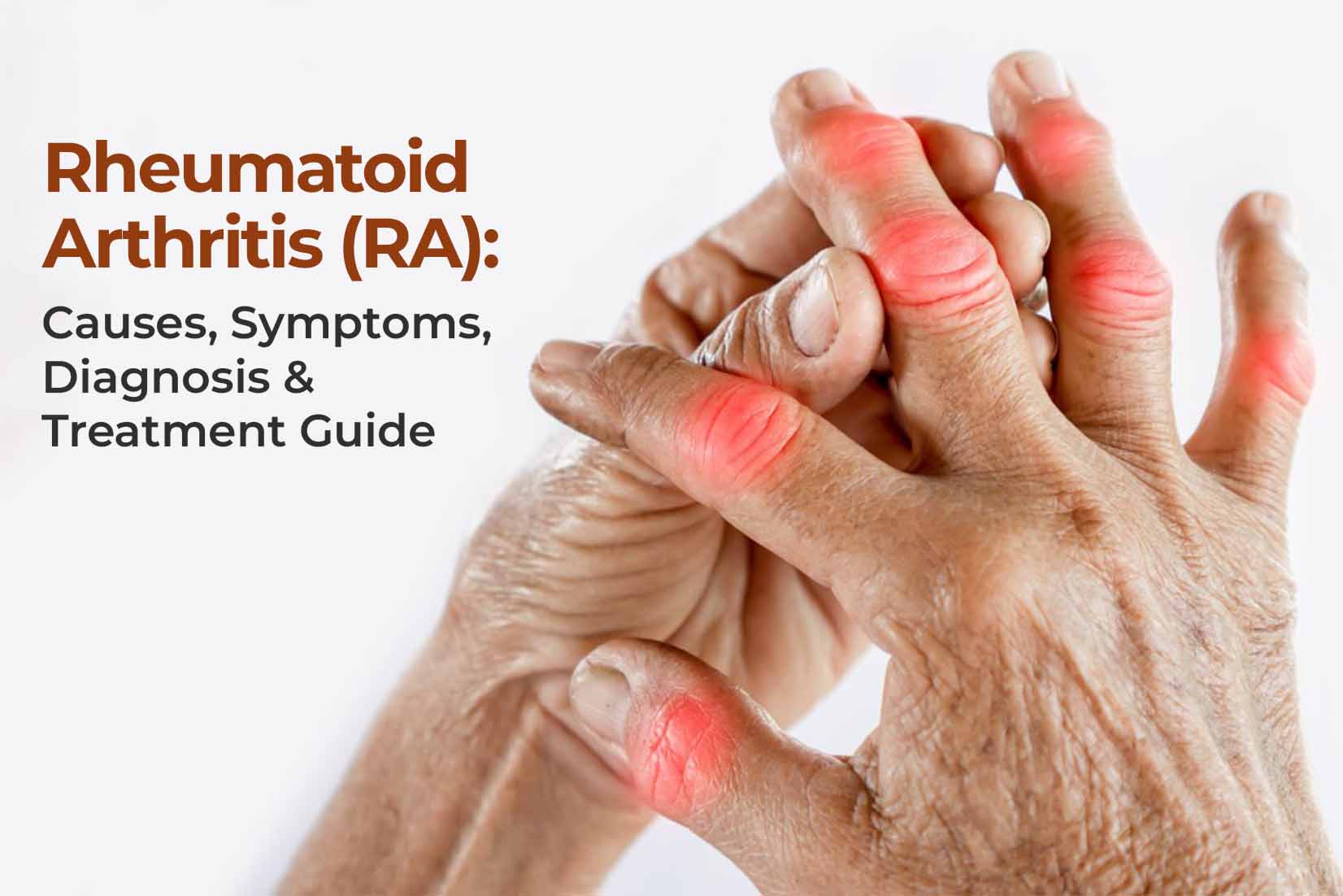
When our immune system starts attacking healthy body tissues mistakenly, this condition is known as Autoimmune disorders. It is a chronic condition with over 80 known types in which rheumatoid arthritis is one of them. Rheumatoid arthritis causes inflammation in the joints, pain, stiffness, and swelling.
However, it can also affect other organs of the body. As per 2020 global statistics report around 17.6 million people worldwide had rheumatoid arthritis. While early diagnosis, the right treatment approach, lifestyle adjustments, along with physical therapy can help in managing symptoms as well as reduce joint damage.
What Causes Rheumatoid Arthritis?
The exact cause is still unknown. However, certain factors contribute to the development of RA.
Here’s the following factors:
- Genetics: Family history of RA can raise the risk
- Hormonal imbalance: RA is more common in women due to hormonal influence.
- Immune system dysfunction: The immune system attacks joint tissues.
- Lifestyle factors: Obesity and stress may worsen inflammation.
- Environmental triggers: Viruses, bacteria, air pollution, and smoking may increase the risk of RA.
Early Warning Signs of Rheumatoid Arthritis
Common early warning signs of RA include:
- Chronic joint pain
- Fatigue
- Low energy
- Morning stiffness that lasts longer than 30 minutes
- Mild fever
- Swelling in small joints like fingers, wrists, or toes
- Joint tenderness on touch
- Warmth or redness around joints
- Difficulty moving the affected joint
Advanced Symptoms & Complications
If rheumatoid arthritis left untreated it may progress and result in complex complications:
- Anemia
- Loss of joint function
- Reduced grip strength and mobility
- Osteoporosis due to chronic inflammation
- Severe joint deformity
- Nodules under the skin
- Lung problems (inflammation, scarring)
- Increased risk of heart disease
- Reduced grip strength and mobility
- Eye inflammation (dry eyes or scleritis)
Stages of Rheumatoid Arthritis
Understanding the stages of rheumatoid arthritis (RA) helps patients to recognize the development of the illness and find appropriate therapy.
Stage 1: Early RA
The immune system targets the synovium, a membrane or lining of the joints in the first stage. In this stage patients can experience minor pain, stiffness, and edema, especially around tiny joints like fingers & toes. X-rays do not yet show any damage, but inflammation is already present. Progression can be reduced or even stopped with early detection and treatment.
Stage 2: Moderate RA
In this stage synovium swells and starts to damage cartilage, the tissue that softens joints, due to increase in inflammation. As the symptoms worsen, there is noticeable edema, warmth, and decreased range of motion. Moreover, it become more difficult for patients to perform their routine tasks. In this stage imaging tests usually show clear signs of joint injury.
Stage 3: Severe RA
Significant cartilage loss and bone degeneration occur due to inflammation in stage 3 as it is a severe stage. In this stage, pain increases significantly as joints become clearly deformed. Daily tasks such as walking, bending, and grasping also become difficult to perform. Aggressive therapy has become essential In order to prevent a permanent impairment.
Stage 4: End-Stage RA
The final stage take place when there’s less discomfort but considerable high joint damage present. Joints lost a lot of their basic functions and become stiff. Pain can go away but weakness, stiffness, and impairments remain. In this stage, supportive treatment as well as recovery become essential.
How Rheumatoid Arthritis Is Diagnosed
Doctors use various tests to confirm RA and rule out other conditions.
1. Physical Examination
Doctor checks following physical symptoms in patients to detect RA:
- Swelling
- Range of motion issues
- Deformities
- Symmetrical joint involvement
- Joint tenderness
- Warmth & redness
2. Blood Tests (RF, anti-CCP, ESR, CRP)
- CRP (C-Reactive Protein): It helps to identify active inflammation in the body.
- RF (Rheumatoid Factor): It is usually high in RA patients.
- ESR (Erythrocyte Sedimentation Rate): Measures inflammation in any part of the body.
- Anti-CCP Antibodies: It is a highly specific marker for RA.
3. X-ray, MRI, Ultrasound
These imaging tests help to evaluate joint damage clearly:
- Ultrasound: It helps to detect fluid, inflammation, as well as synovial swelling.
- X-ray: It shows joint space narrowing as well as bone erosion.
- MRI: Helps to detects early tissue as well as bone changes.
4. Identifying Early-Stage RA
To detect early stage of RA, doctor evaluate the following symptoms:
- Chronic symptoms that last for more than 6 weeks
- Positive RF or anti-CCP in blood tests
- Swelling in small joints like wrist, fingers, etc
- Symmetrical joint involvement
- Elevated inflammatory markers
Moreover, early detection can prevent long-term joint damage.
Living With Rheumatoid Arthritis
Managing RA involves lifestyle changes as well as regular treatment. Here’s the following lifestyle tips for living easily with this condition:
- Consume an anti-inflammatory diet
- Maintain a healthy weight
- Use heat and cold therapy when needed
- Stay physically active with gentle physical exercises
- Avoid smoking, as it can worsen the condition.
- Keep regular follow-up visits with your rheumatologist
- Take prescribed medicines regularly to get effective results
- Protect joints using proper posture and techniques
- Join support groups for emotional well-being
Conclusion
Rheumatoid Arthritis is a chronic autoimmune disorder that can affect daily life. Common symptoms include swelling and joint pain usually in small joints of the hands, wrists, and feet, and tenderness. However, early diagnosis and proper management can help patients to maintain mobility as well as reduce complications.
Modern medicines like Xeljanz 5mg Tablet have improved outcomes by controlling inflammation more effectively. To avail this medicine in affordable price range must visit Globans Pharma. As we provide our healthcare services across the world.

FAQs
1. Is rheumatoid arthritis a curable condition?
There is no permanent cure till now. However, symptoms as well as progression can be controlled with early and consistent treatment.
2. Which medicine is commonly used for RA?
There are medicines like Xeljanz 5mg Tablet and other are available to treat RA. Also, the use of medicine depends on the severity of the disease.
3. Can rheumatoid arthritis affect organs?
Yes, in advanced stages RA can affect the eyes, lungs, heart, as well as skin.
4. Is moderate physical exercise safe for RA patients?
Yes, there are some gentle exercises like walking, stretching, and yoga that can help to improve flexibility and reduce pain.
References:
- Cleveland Clinic — Detailed description of the four clinical stages of RA. Cleveland Clinic – https://my.clevelandclinic.org/health/diseases/4924-rheumatoid-arthritis?utm_source=chatgpt.com
- Healthline — Explains RA stages from mild inflammation to joint fusion. Healthline – https://www.healthline.com/health/rheumatoid-arthritis/stages-and-progression?utm_source=chatgpt.com
- Drugs.com — Medical-reviewed four-stage classification based on X-ray findings. Drugs.com – https://www.drugs.com/medical-answers/4-stages-rheumatoid-arthritis-3559399/?utm_source=chatgpt.com
- Verywell Health / RheumatoidArthritis.org — RA progression and how stages correspond with joint damage. RheumatoidArthritis.org – https://www.rheumatoidarthritis.org/ra/symptoms/progression/?utm_source=chatgpt.com
- Vaidam Health — Overview of the four RA stages including cartilage damage and ankylosis.
Leave a Reply